The moments that made the artist
CREATIVE PROFESSIONALS
“Every creative life has an origin—and a moment that made them.”
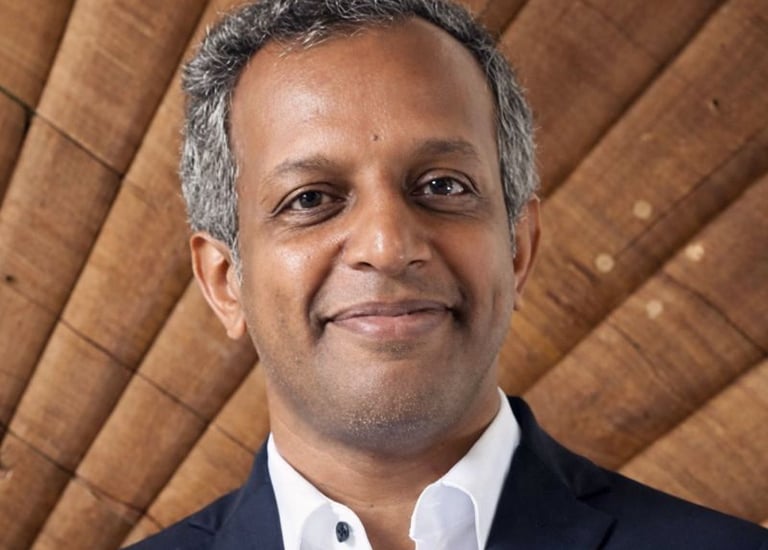
Tallur L.N.
Laxmi Narayan Tallur, professionally known as Tallur L.N., is a preeminent Indian conceptual artist whose work serves as a profound dialogue between traditional iconography and the relentless march of industrialization. Born in 1971 in Koteswara, Karnataka, Tallur’s practice is deeply rooted in his academic foundation at M.S. University, Baroda, yet it transcends borders as he divides his creative life between India and South Korea.
His practice is defined by large-scale sculptures and site-specific installations that fuse classical bronze and stone with modern machinery, concrete, and industrial waste. Through works like the celebrated Highway Nirvana, Tallur critiques the intersections of consumerism, ecology, and spirituality, questioning our perception of permanence in a disposable age. A global force in contemporary art, he has showcased his visionary installations at prestigious venues including the Venice Biennale, Yorkshire Sculpture Park, and the Mori Art Museum, cementing his reputation as a master of material storytelling.
Vinod Bhardwaj
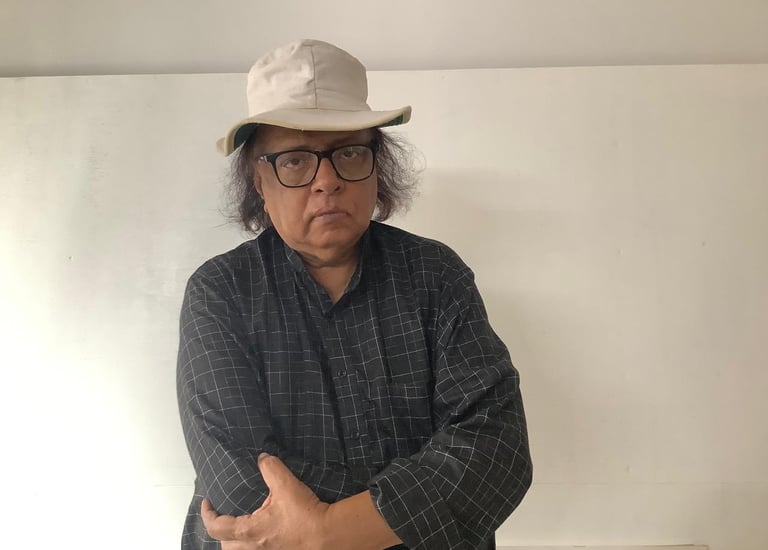
Vinod Bhardwaj: A Multidisciplinary Cultural Luminary
Born in Lucknow in 1948, Vinod Bhardwaj is a distinguished psychologist, journalist, and filmmaker whose career spans over five decades of profound cultural leadership. A versatile independent curator and critic, he first established his voice co-editing the literary journal Aarambh and serving as the features editor for Navbharat Times. As a prolific author, he has a creative breadth that includes acclaimed poetry and novels such as Seppuku and Sachcha Jhooth, both published in English by HarperCollins.
Bhardwaj’s scholarly contributions to the art world are seminal, most notably the art encyclopedia Brihad Adhunik Kala Kosh and extensive monographs on masters like F.N. Souza and A. Ramachandran. His documentary films on iconic figures like Jogen Chowdhury and Krishen Khanna are celebrated for their archival depth and experimental vision. Most recently, his 2025 centenary volume on F.N. Souza for the historic Dhoomimal Gallery reaffirms his lifelong dedication to documenting and elevating South Asian contemporary art.
Bose Krishnamachari
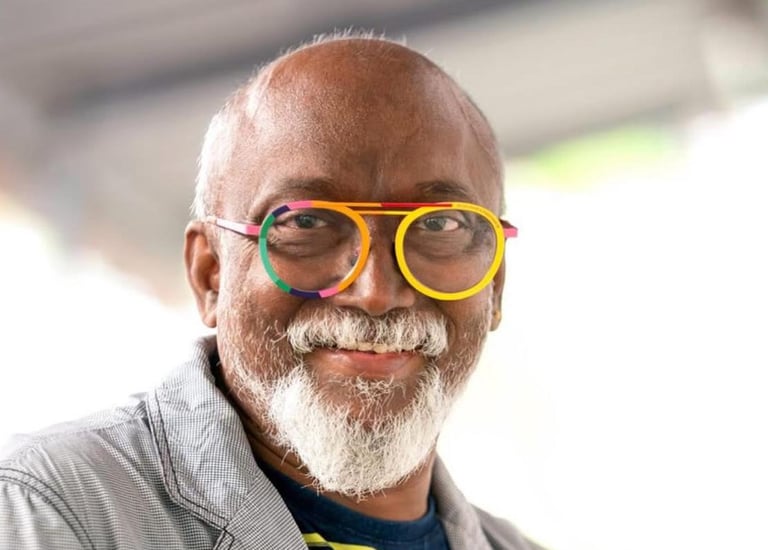
Bose Krishnamachari is a transformative force in contemporary Indian art, distinguished as an artist, curator, and visionary institution-builder. Born in 1963 in Kerala, his journey took him from the Sir J.J. School of Art in Mumbai to Goldsmiths College in London, shaping a multidisciplinary practice that defies easy categorization. Since moving to Mumbai in 1985, Krishnamachari has utilized vivid abstract paintings, multimedia installations, and architecture to challenge established power structures and celebrate cultural hybridity.
His legacy is perhaps most defined by his role as a catalyst for the Indian art ecosystem. As the co-founder and President of the Kochi-Muziris Biennale, he helped establish South Asia’s most significant contemporary art platform, bringing global discourse to the shores of Kerala. A recipient of the Kerala Lalit Kala Akademi and Charles Wallace India Trust awards, Krishnamachari continues to bridge the gap between emerging talent and international audiences, cementing his position as a pivotal architect of India’s modern cultural identity.
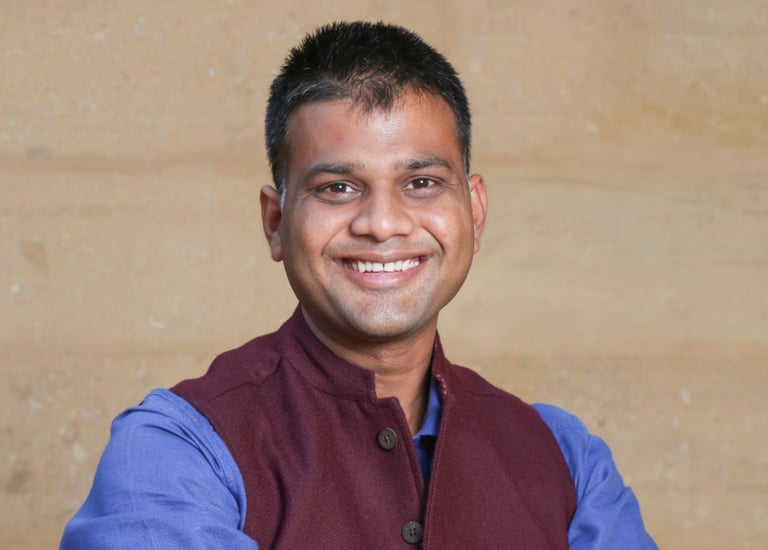
Vicky Roy is one of India’s most compelling contemporary photographers, defined not only by the images he captures but by a life transformed into a powerful visual narrative. Born in Purulia, West Bengal, Roy’s trajectory is extraordinary: after running away from home as a child, he survived on the streets of New Delhi before finding a turning point through the Salaam Baalak Trust. It was here that photography provided him with a newfound sense of direction, discipline, and authorship.
Roy refined his craft at Triveni Kala Sangam and later in New York, developing an internationally recognized practice centered on memory, dignity, and human resilience. His work is inseparable from his personal history; he does not merely observe his subjects from a distance but photographs from a place of lived understanding and deep empathy. Today, Vicky Roy stands as a singular example of how adversity can be transmuted into a profound artistic language and a lasting cultural voice.
Vicky Roy


Maja Ćirić
Marine Tanguy is a British–French art entrepreneur, author, and visionary leader in the contemporary art world. As the founder and CEO of MTArt Agency, she has pioneered a new model for artist representation—one that prioritizes long-term career sustainability, global visibility, and creative integrity. Her agency connects exceptional contemporary artists with major museums, international brands, collectors, and institutions, ensuring their work reaches influential platforms while safeguarding their artistic vision.
Tanguy operates at the dynamic intersection of art, culture, and business. She is also the author of The Visual Detox, a compelling, culture-driven guide that helps readers reclaim their attention and cultivate a healthier relationship with the images and media shaping modern life.
Through curatorial projects, strategic partnerships, and public talks, Tanguy champions emerging voices and makes art more accessible to broader audiences. She reframes creativity as a public good rather than a luxury, advocating for artists as essential cultural forces that foster empathy, critical reflection, and meaningful societal change. Her work continues to elevate the role of contemporary art in today’s world.
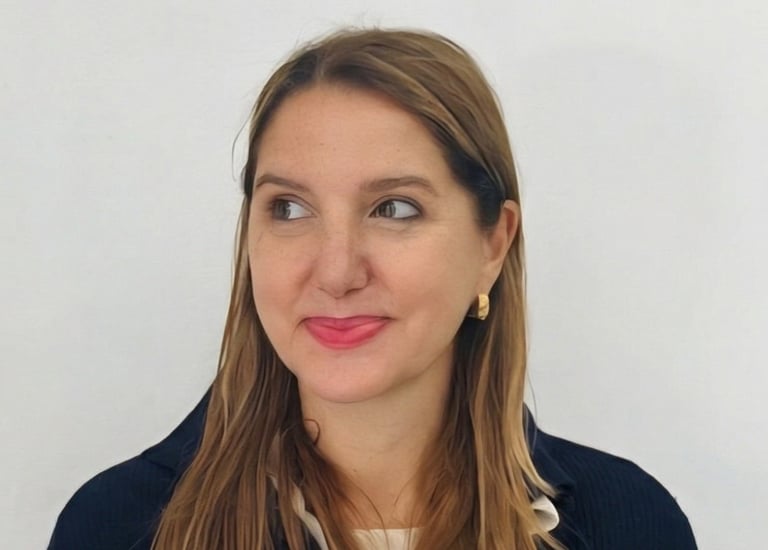
Maja Ćirić, PhD, is a distinguished independent curator and art critic whose practice critically examines the intersections of global power, technology, and contemporary culture. With a particular focus on the geopolitics of curating, she investigates how infrastructural and planetary-scale computation influence modern regimes of visibility and representation.
Since 2020, her research has centered on multipolar geopolitics and “phygital” exhibition formats, probing the evolving agency of artists within hybrid physical-digital environments. Her international prominence is underscored by landmark contributions to the Venice Biennale, where she curated the Serbian Pavilion in 2007 and served as its commissioner in 2013.
Ćirić has conceived and led numerous biennials and discursive platforms across Europe, earning critical acclaim and prestigious curatorial awards for her insightful engagement with emerging art scenes. A prolific contributor to leading international art publications, she continues to shape discourse on the curator’s role amid rapidly shifting technological and geopolitical landscapes.
Marine Tanguy
Daniele Galliano
Daniele Galliano (born 1961 in Pinerolo) is a self-taught Italian painter based in Turin, celebrated as a key figure in the “new Italian painting” movement. Renowned for his distinctive “photographic realism,” Galliano draws from amateur snapshots to explore modern social dynamics, collective identity, and the individual’s place within contemporary society. His tightly composed scenes often carry a quiet psychological tension, transforming everyday moments into profound reflections on human connection and alienation.
Galliano’s international stature is underscored by prestigious participations in the Venice Biennale, Havana Biennial, and Kochi-Muziris Biennale. Over the decades, his practice has evolved from intimate, personal narratives to broader engagements with pressing issues such as migration, conflict, and religious radicalism. His works are held in prominent collections, including GAM – Galleria Civica d’Arte Moderna e Contemporanea in Turin and the Galleria Nazionale d’Arte Moderna e Contemporanea in Rome. Galliano continues to offer a poignant, humanist lens on the complexities of our time through masterful, atmospheric painting.
G.R. Iranna
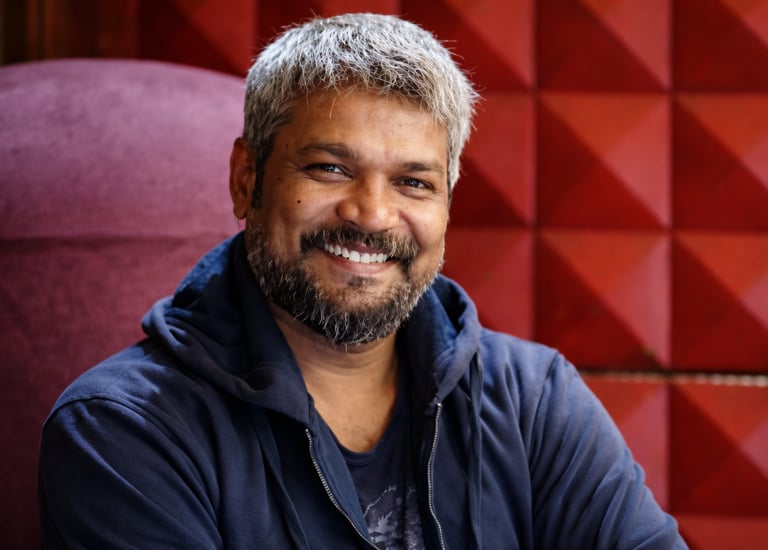
G.R. Iranna (b. 1970) is a distinguished contemporary Indian artist celebrated for his quasi-abstract, philosophical works that probe human vulnerability, spirituality, and the transience of life. Born in Karnataka, he received his early education in a traditional Gurukul, which profoundly shaped his meditative and introspective approach to art.
Iranna earned his MFA from the College of Art, New Delhi, and later participated in a residency at Wimbledon School of Art, London. He is known for his innovative use of unconventional materials — ash, charcoal, and brick dust applied on tarpaulin — creating richly textured surfaces that evoke the cycles of existence and impermanence.
A significant milestone came in 2019 when he represented India at the Venice Biennale with his installation Naavu. He has received the National Award (1997) and the ABPF Signature Art Prize (2008). His works are held in major collections, including the National Gallery of Modern Art, New Delhi, and the Singapore Art Museum.
Ismet Jonuzi
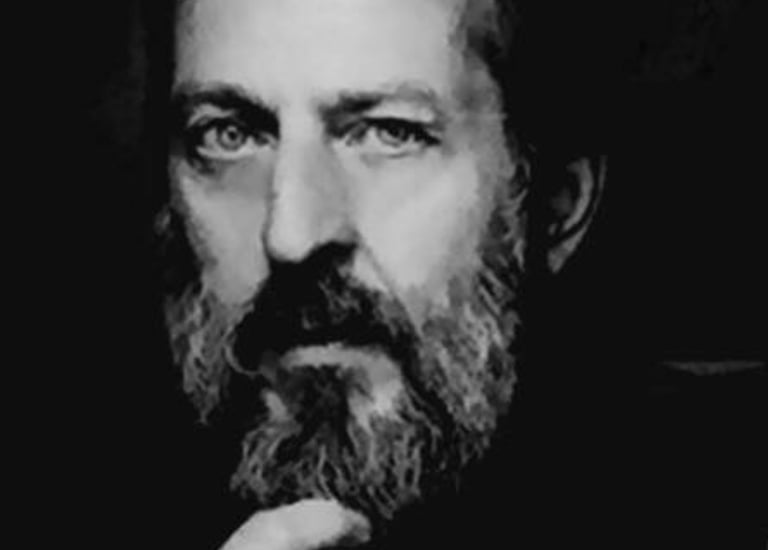
Ismet Jonuzi (b. 1961) is an acclaimed Albanian sculptor and multimedia artist from Kosovo whose provocative works confront the legacies of conflict. Largely self-taught in Pristina and refined through international residencies, Jonuzi transforms decommissioned weapons and spent casings from the Kosovo War into powerful anthropomorphic sculptures. These haunting figures embody trauma, memory, and the “wounded soul” of his homeland while speaking to themes of resilience and renewal.
Blending raw industrial materials with poetic humanism, his practice reclaims instruments of destruction as vessels of hope. Signature works such as Weapons of Peace fuse rifles and shell casings into human forms that evoke both suffering and survival. Jonuzi’s sculptures have been exhibited at the Venice Biennale, Manifesta, and Kosovo’s National Gallery. Increasingly, he incorporates video and sound installations to expand his narratives of reconciliation, bridging Balkan histories with broader conversations in global contemporary art. Based between Kosovo and Europe, Jonuzi continues to create compelling testimony through material transformation and emotional depth.
Laura Gowen
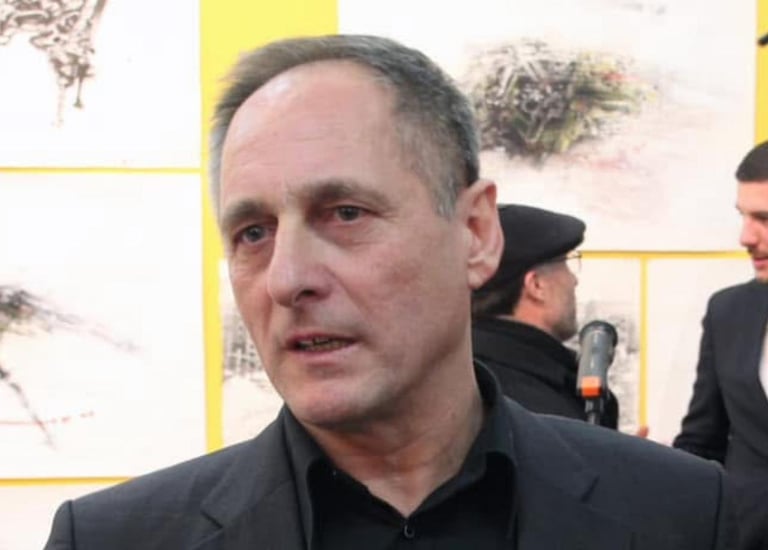
Laura Gowen is the esteemed founder and director of Gowen Contemporary, a premier international art gallery based in Geneva, Switzerland. Since co-founding the space in 2009 and assuming sole ownership in 2010, she has skillfully guided its evolution into a dynamic platform for global artistic dialogue.
Under her visionary leadership, Gowen Contemporary has cultivated a rigorous exhibition program that champions pioneering artists known for their experimental and critically engaged practices. The gallery’s curatorial philosophy emphasizes inclusion, diversity, and openness across all media, seamlessly integrating bold contemporary voices with carefully selected historical works from distinguished private collections.
A regular participant at major international art fairs, Gowen Contemporary recently made a notable impression at the India Art Fair with works by Giuliano Macca. As Laura Gowen prepares for Art Paris in April 2026, she continues to strengthen her position as a vital bridge between innovative artistic practices and the global collector community.
Allison Watkins
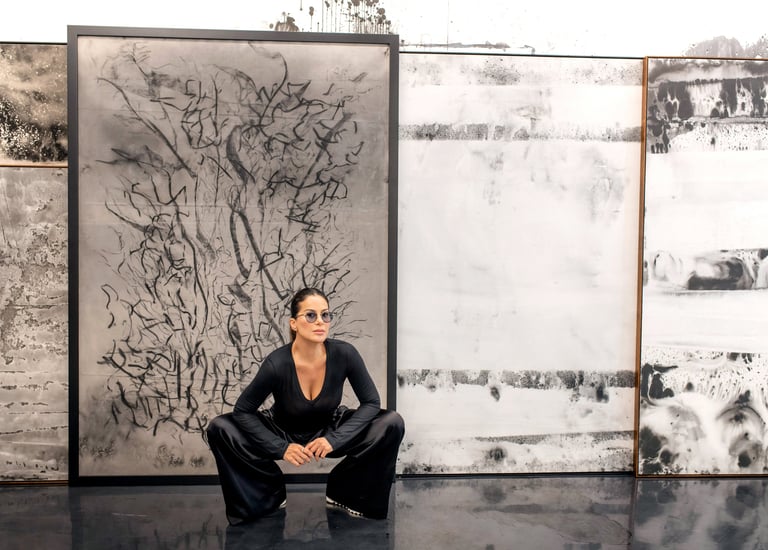
Paula Klien (b. 1968, Rio de Janeiro) is a Brazilian multidisciplinary artist whose expansive practice encompasses drawing, painting, sculpture, installation, photography, performance, and writing. Deeply attuned to the passage of time, her work navigates the delicate thresholds between past and future, ruin and renewal, presence and absence. With quiet intensity, she probes themes of fragility, impermanence, and the tension between control and rupture, offering subtle meditations on memory, destiny, and the ephemeral nature of existence.
From an early age, Klien cultivated a profound sensitivity to gesture, atmosphere, and non-verbal communication—elements that continue to form the emotional core of her artistic language. She first gained recognition in photography between 2004 and 2014, before expanding her practice into painting with Chinese ink and water, pioneering crypto art in Brazil, and exploring installation and performance. In recent years, she has ventured into literature with her debut novel, Todas as Minhas Mortes (2024), further enriching her layered exploration of human experience.
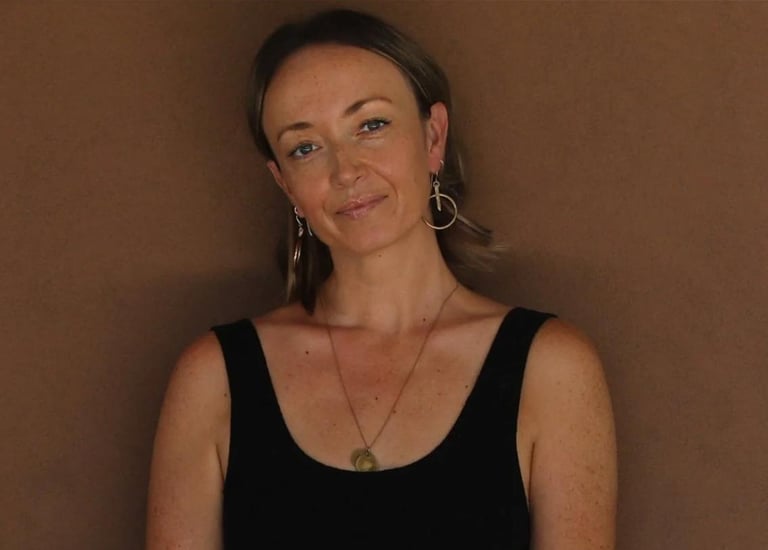
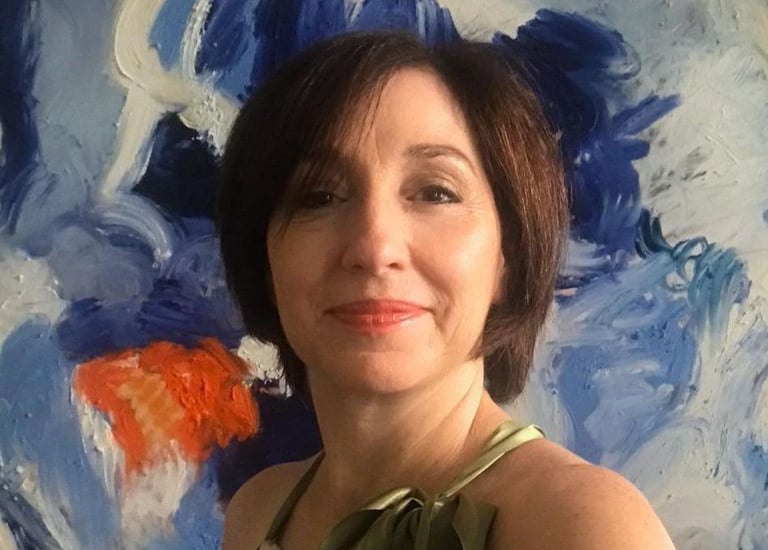
Allison Watkins is a contemporary artist known for her thoughtful explorations of place, memory, and material culture. Born and raised in the San Francisco Bay Area, she holds a BFA from San Jose State University and an MFA from San Francisco State University.
Watkins’ work has been exhibited widely, including at the San Jose Institute of Contemporary Art, San Francisco Camerawork, The Print Center in Philadelphia, Adobe Books Gallery, Chandra Cerrito Contemporary in Oakland, the Textile Arts Center in New York City, and the Napa Valley Museum. Her practice has earned recognition from SFMOMA curator Janet Bishop, who selected her for New American Paintings issue 109. She has also participated as an Affiliate Artist at the prestigious Headlands Center for the Arts in Sausalito.
With a keen sensitivity to both personal and collective histories, Watkins creates works that bridge photography, printmaking, and installation, inviting viewers to reflect on the layered stories embedded in everyday environments. Her voice continues to enrich the Bay Area’s vibrant contemporary art scene.
Paula Klien
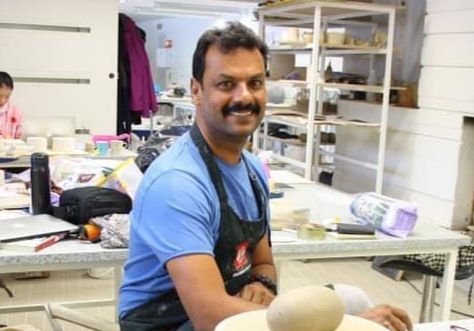
Vinod Daroz
Vinod Daroz (b. 1972, Kalwakurthy, Telangana) is a leading Indian contemporary ceramic artist who has elevated clay from a utilitarian craft to a profound medium of artistic expression. His distinctive style masterfully fuses traditional Indian pottery techniques with modernist abstraction. Organic forms, richly textured surfaces, and nuanced earthy glazes evoke the rhythms of nature, the weight of memory, and the enduring spirit of cultural heritage.
Through meticulous hand-building of large-scale vessels and immersive installations, Daroz harnesses the transformative power of fire, smoke, and natural pigments. The resulting cracked, weathered patinas speak eloquently of time’s impermanence and humanity’s quiet resilience.
Daroz’s work has been exhibited at prestigious venues including Delhi’s Triveni Kala Sangam and leading Mumbai galleries, as well as in national ceramics biennales. His pieces reside in prominent private collections worldwide and serve as powerful ambassadors for Telangana’s rich artisanal legacy on the international stage.
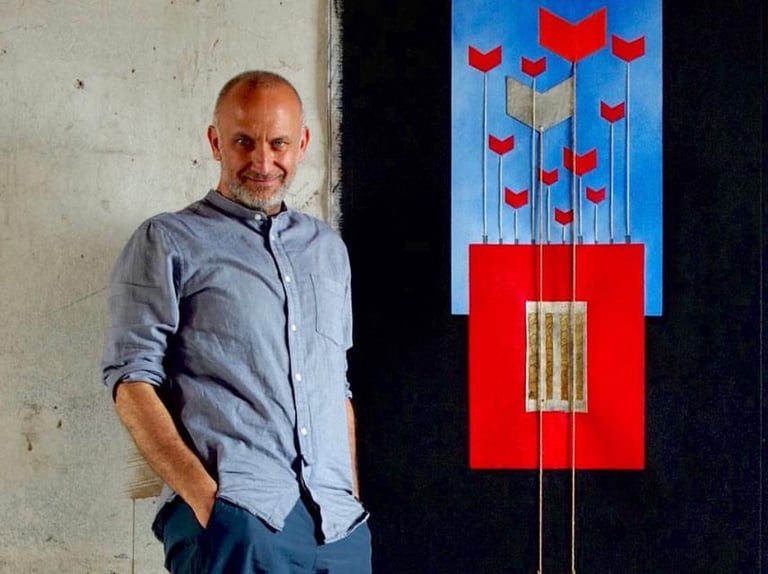
Andrea Pinchia
Andrea Pinchi (Italian, b. 1967) is renowned for his distinctive “Pincbau” technique, a singular form of mixed-media assemblage that transforms salvaged materials from his family’s generations-old pipe organ workshop into compelling sculptural reliefs.
Working with reclaimed wooden pipes, metal components, and resonant organ fragments, Pinchi constructs richly textured surfaces that evoke the memory of sound, vibration, and mechanical harmony. These elements—once integral to sacred music—are reimagined as abstract, sonic landscapes, where layered patinas and architectural forms suggest echoes of ritual, time, and spiritual resonance.
Pinchi’s practice bridges historical craftsmanship with contemporary abstraction, exploring themes of memory, inheritance, and the enduring dialogue between music and visual art. His works transform liturgical relics into poetic meditations on presence and absence, inviting viewers to experience the visual as a lingering acoustic presence.
Widely exhibited in Italian galleries, Vatican collections, and major European art fairs, Pinchi has earned critical acclaim for his innovative fusion of musical heritage and sculptural invention.
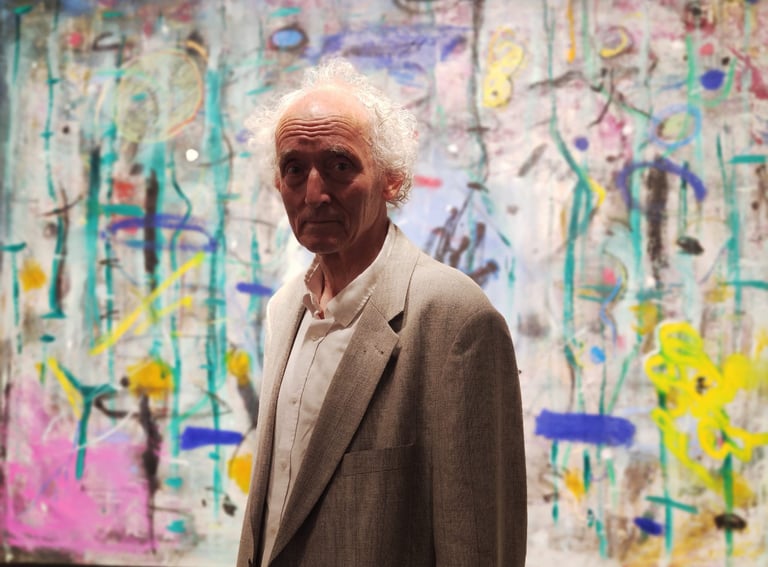
Karel Stoop
Karel Stoop: The Architecture of Infinite Being
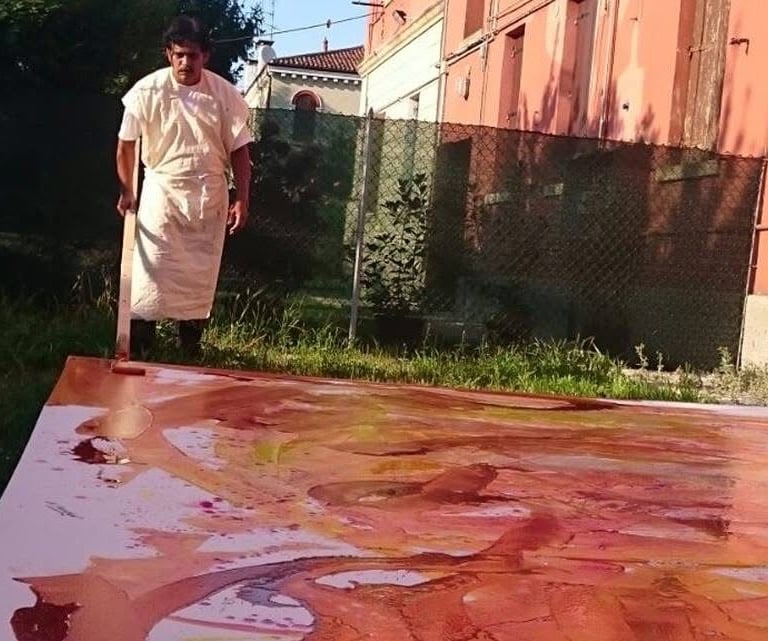
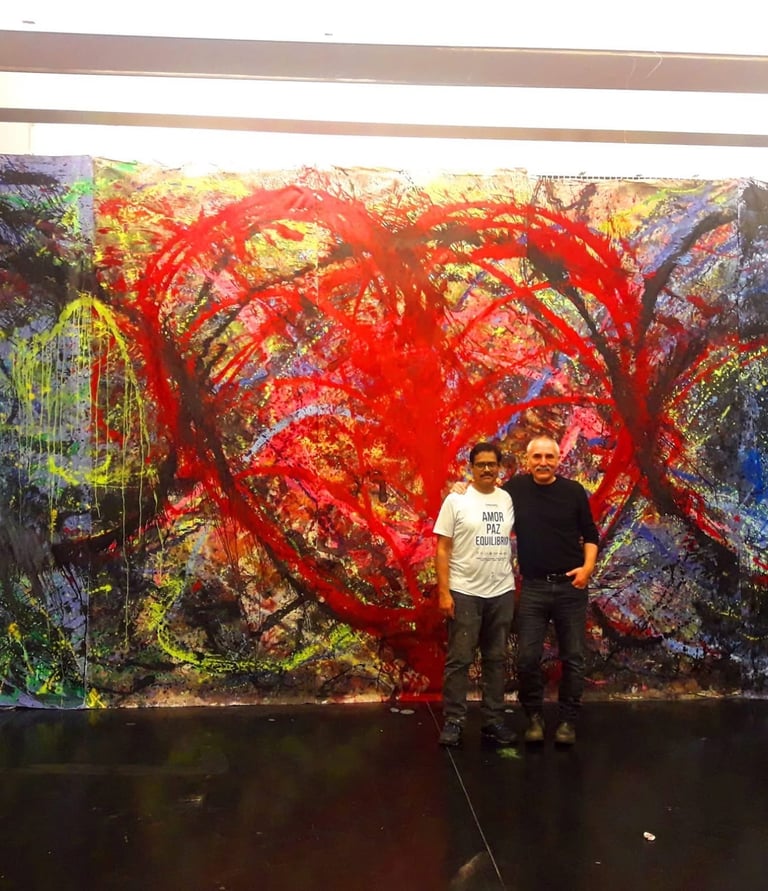
Karel Stoop, born in 1951 in the Netherlands, is a distinguished abstract painter whose monumental canvases function as meditative portals into the cosmos. After establishing his practice in the Netherlands, Stoop evolved beyond conventional forms to develop a distinctive post-1970s intuitive style. Working en plein air, he captures the ephemeral essence of existential themes through a dynamic interplay of spontaneity and profound introspection.
Stoop’s technique embodies a performative dialogue, where bold, layered gestural marks explore the “state of being.” His vivid palette—deep indigos suggesting cosmic vastness and turbulent crimsons conveying inner turmoil—transforms life’s mysteries into immersive visual experiences. Regularly exhibited in Amsterdam and at Art Rotterdam, Stoop’s work resonates with collectors and institutions drawn to the transcendent power of contemporary Dutch abstraction.
EPVS: The Art of Experimental Storytelling
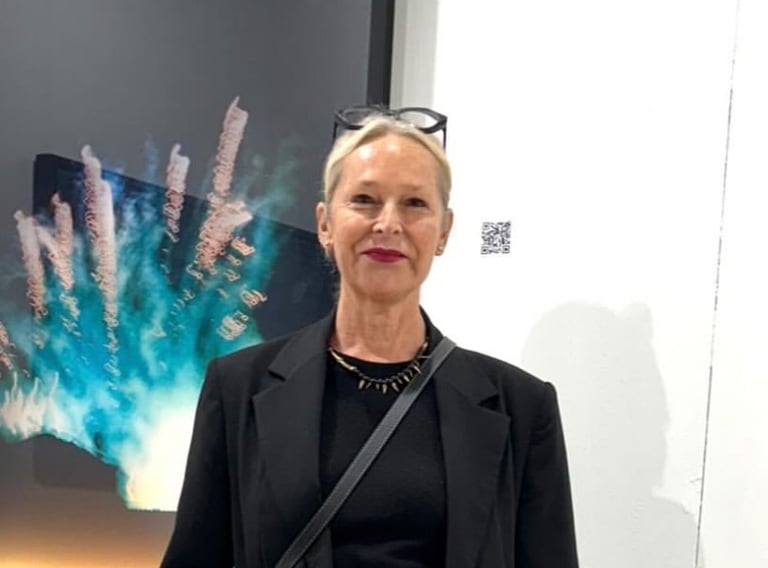
Elena P. V. Sanseverino, widely recognized by her artistic moniker EPVS, is a versatile contemporary artist whose practice bridges her German origins with the vibrant cultural landscape of Rome. Her work is defined by a restless experimentalism, traversing various media to engage deeply with the fluidity of memory, the precision of form, and the layers of human storytelling.
A prominent figure in the Italian contemporary art scene, EPVS has cultivated a significant institutional presence through her evocative installations and thought-provoking compositions. Her career highlights include prestigious solo exhibitions at Rome’s Museo Bilotti and Museo MACRO, as well as landmark shows at Palazzo Collicola in Spoleto and Palazzo della Penna in Perugia. Through her evolving aesthetic, EPVS continues to challenge the boundaries of contemporary expression, making her a vital voice in European art.
Elena P. V. Sanseverino
Satya Sai Mothadaka
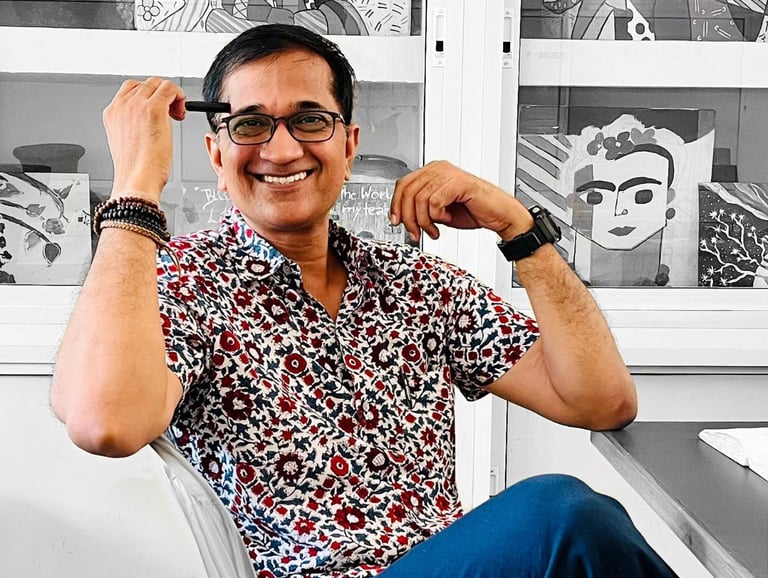
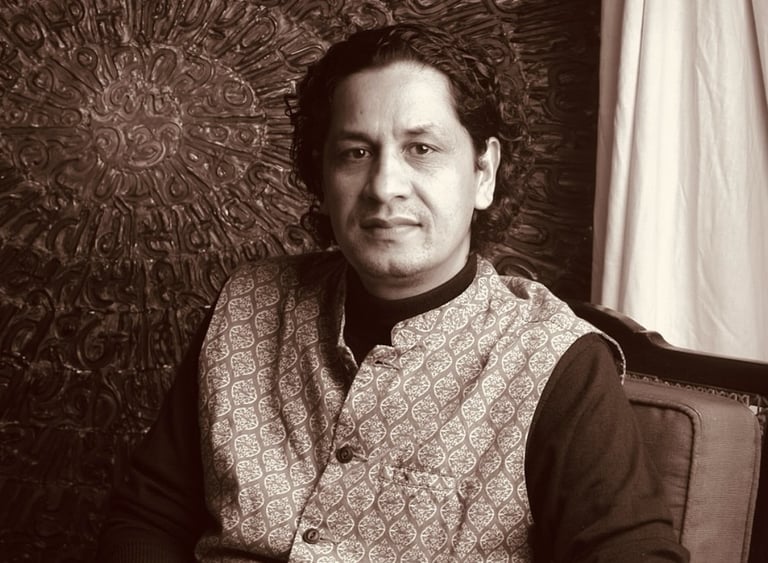
Satya Sai Mothadaka is an Indian visual artist whose practice is deeply rooted in painting, cultural exchange, and international collaboration. He earned his BFA in Painting from Jawaharlal Nehru Technological University, Hyderabad, in 1999, and his MFA from Jamia Millia Islamia, New Delhi, in 2002.
Mothadaka’s career spans exhibitions, artist residencies, art camps, workshops, and jury roles across India, South Korea, Vietnam, Russia, and Uzbekistan. His works have been commissioned by the Indian Prime Minister’s Office, Virgin Atlantic, and MAX Hospitals, and are held in the collection of the Museum of Sacred Art in Belgium.
He is the recipient of the Ravi Jain Memorial Foundation Award and Fellowship from Dhoomimal Art Gallery, and was a runner-up for the Bose Pacia Emerging Artist Award in New York. Recognized by NDTV and leading publications as a promising voice in contemporary Indian art, Mothadaka serves as founder-director of the nonprofit Mothadaka Foundation and as a patron of the Royal Scottish Academy in Edinburgh.
Jagmohan Bangani
Jagmohan Bangani: The Luminosity of Himalayan Mysticism
Jagmohan Bangani is an acclaimed visual artist from Uttarakhand whose practice forms a luminous bridge between contemporary art and ancient Vedic philosophy. Deeply rooted in the spiritual heritage of the Himalayas, Bangani’s work offers a profound exploration of contemplation, positivity, and sacred themes. His signature style is defined by an ethereal palette, in which intricate mandalas and stylized deities emerge from atmospheric landscapes that evoke meditative peace.
Through a meticulous process involving oils, acrylics, and mixed media, Bangani employs meditative layering, often incorporating delicate glazing and gold leaf to create a transcendent sense of depth and luminosity. Frequently featured in major Delhi galleries and international art fairs, his paintings are highly sought after for wellness spaces and discerning private collections. Bangani’s art stands as a powerful testament to the enduring, uplifting power of Himalayan mysticism in the modern world.
Viraj Naik
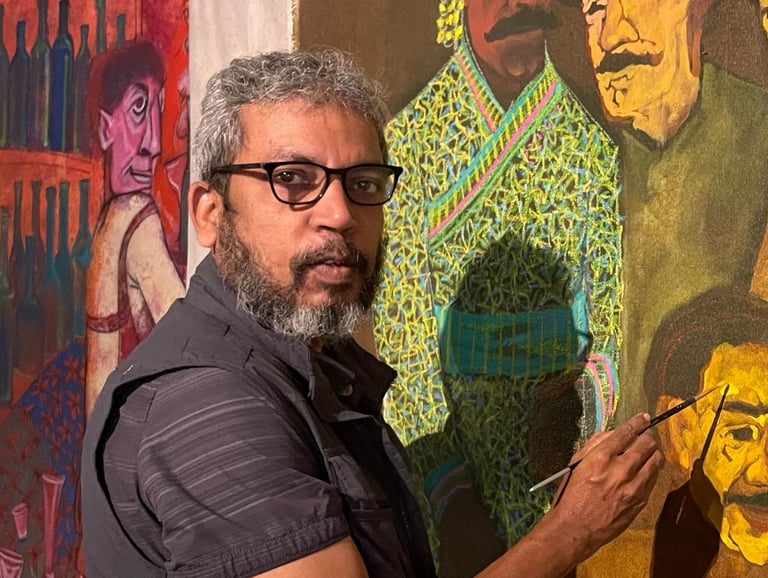
Viraj Naik (b. 1975) is a contemporary Indian artist based in Goa, celebrated for his whimsical and surreal figurative paintings that seamlessly blend human and animal forms. His vibrant, dreamlike compositions fuse mythology, folklore, and subconscious narratives, creating hybrid figures—bird-headed beings, beastly humans, and morphing creatures—that explore themes of identity, desire, transformation, and the primal psyche with playful yet uncanny intensity.
Drawing inspiration from Goan cultural traditions, global surrealism, and the complexities of inner life, Naik’s works feature bold color palettes, intricate patterns, and fluid, organic shapes. Key series such as Animal Kingdom and The Lovers exemplify his signature style: fantastical yet deeply psychological scenes that blur boundaries between the familiar and the strange, the civilized and the wild. Through these imaginative hybrids, Naik invites viewers into a world where the boundaries of self dissolve, revealing universal truths about human nature and the enduring power of myth in contemporary life.
S.D. Hari Prasad
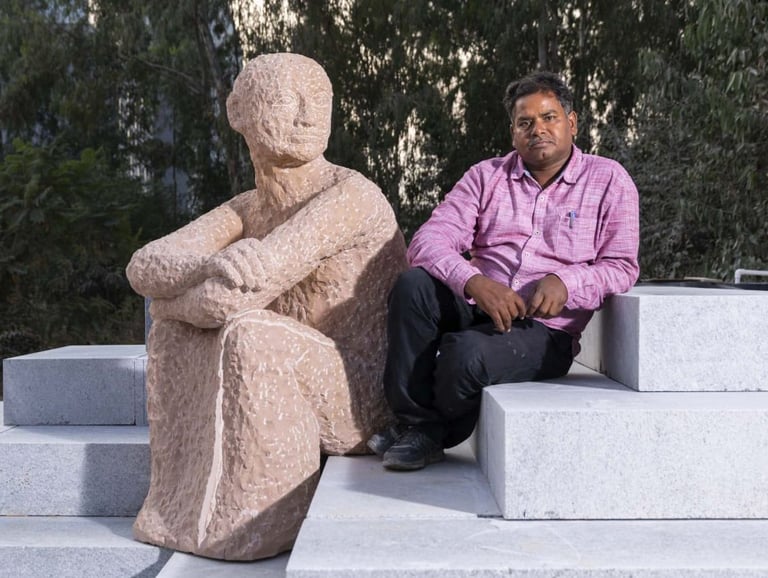
S.D. Hari Prasad is a distinguished sculptor based in Hyderabad, celebrated for his ability to harmonize ancient stone-carving traditions with modern, machine-assisted precision. A recipient of the National Award from the Lalit Kala Akademi, Prasad transforms rigid materials like granite and marble into fluid explorations of nature and mythology.
His work serves as a physical manifestation of the human psyche’s complexity. Through his use of abstract, geometric forms, he captures the intricate layers of human consciousness—where sharp, rational edges meet the soft, organic curves of emotion. By blending manual craftsmanship with industrial techniques, Prasad mirrors the modern mind: a site where primal instincts and sophisticated logic coexist. His sculptures offer a meditative space to contemplate the enduring continuity between our ancestral past and our structured, contemporary identity. the complexities of the human psyche
Anjaneyulu G
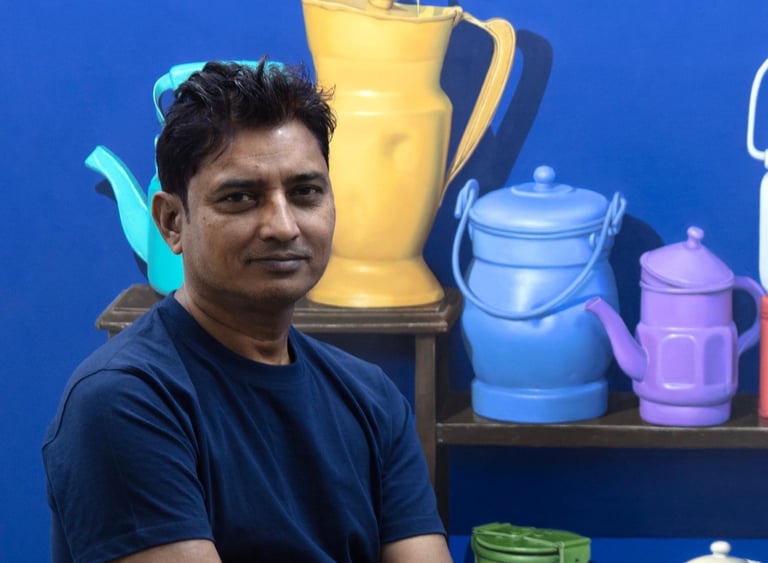
Anjaneyulu G is a masterful Indian contemporary artist whose hyper-realistic oil paintings elevate the mundane into the monumental. Born in 1976 and based in Hyderabad, he centers his practice on the profound transformation of simple, everyday household items—such as weathered steel vessels, vintage lanterns, and worn tea kettles.
By isolating these objects against minimalist, often stark backgrounds, Anjaneyulu strips away the noise of the modern world, inviting viewers to confront the quiet dignity of the utilitarian. His meticulous attention to light, texture, and reflection turns cold metal and glass into iconic symbols of memory and nostalgia. Through his lens, a common kitchen utensil becomes a sacred vessel of personal history and cultural identity.
Anjaneyulu’s work resonates with a deep reverence for the overlooked, reminding us that beauty and meaning reside not in the extraordinary, but in the intimate poetry of the ordinary.
Origins
Moments that shaped artists, seen through their own eyes.
Our Story
Tracing artists' journeys from childhood sparks to breakthrough moments.